Improving Safety Culture Through Leadership at SPL Powerlines
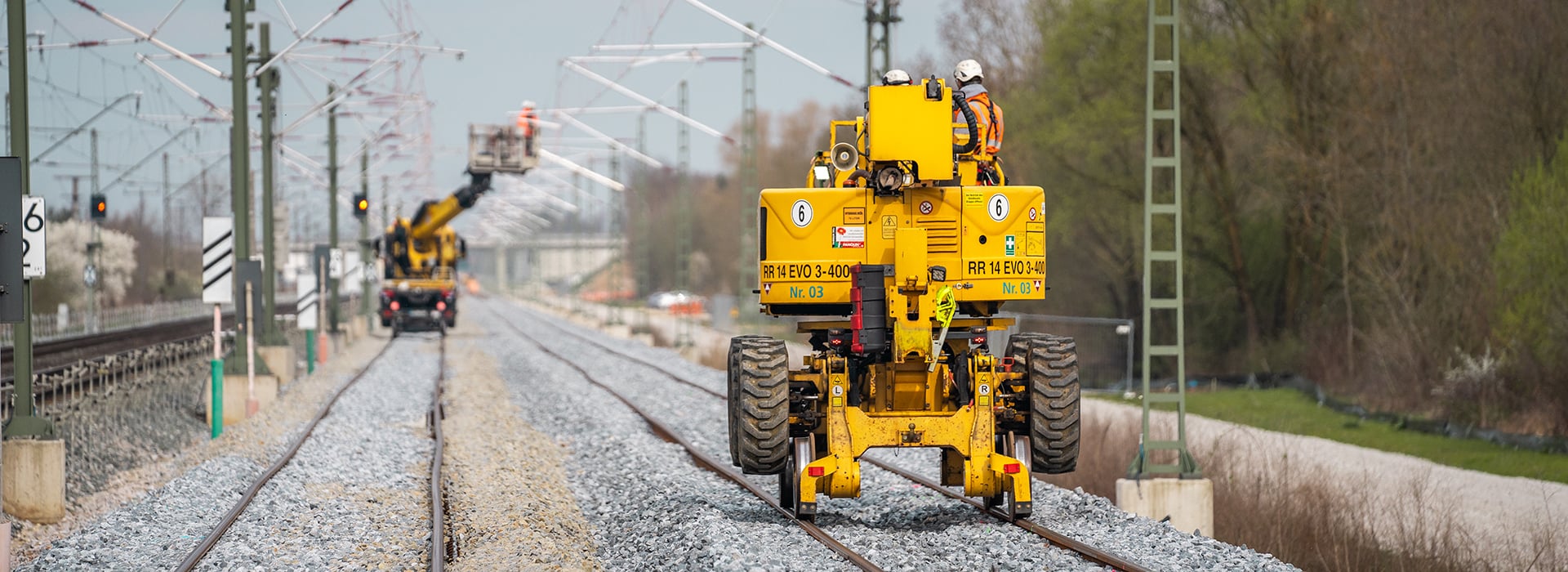
SPL Powerlines Germany is part of Equans and electrifies railway infrastructure for local and long-distance transport on construction sites across Germany. The company operates in a decentralised way: teams are assembled on a project basis and work largely autonomously. SPL Powerlines sees continuous learning and improvement – especially in safety management – as a core part of its identity.
Challenge
In 2022, the company observed a low level of operational discipline, which led to an increase in incidents with high potential (HiPo) severity.
Leadership asked two key questions:
- How can we bring safety awareness more directly onto construction sites?
- How can we better mobilise middle and line management around safety?
The ambition was clear: move SPL Powerlines to the next level toward “best in class.”
dss+ Approach
An initial assessment was conducted to establish the current state:
- Document analysis of incident data
- dss+ Safety Perception Survey™ to assess safety culture
- Leadership interviews for deeper insights
- Site and construction walkdowns to observe real practices
The assessment showed that SPL has both the willingness and resources to improve, but leadership needed strengthening through standardised safety routines.
Existing leadership safety rituals were reviewed and validated in a multi-step process with a design team, and used to develop a shared vision for the “PowerSafe” programme. In the following workshops rituals were refined to fit operational realities and processes were standardised (e.g. between local and long-distance rail operations). These safety rituals were then linked to leadership competencies, and appropriate training and coaching materials were developed.
What is a Safety Ritual?
A safety ritual has the following characteristics:
- Conducted by managers, supervisors, or responsible leaders
- Focused on and involves their teams
- Has a direct impact on serious injury and fatality risks, as well as overall incident rates
- Participation is mandatory
- Clearly defined structure:
- Agenda
- Objectives
- Inputs and outputs
- Roles and responsibilities
- Clearly defined frequency
Effectiveness is maximised through a predefined short- to medium-term frequency (from daily to monthly), ensuring regular interaction between leaders and teams, as well as close follow-up and progress tracking.
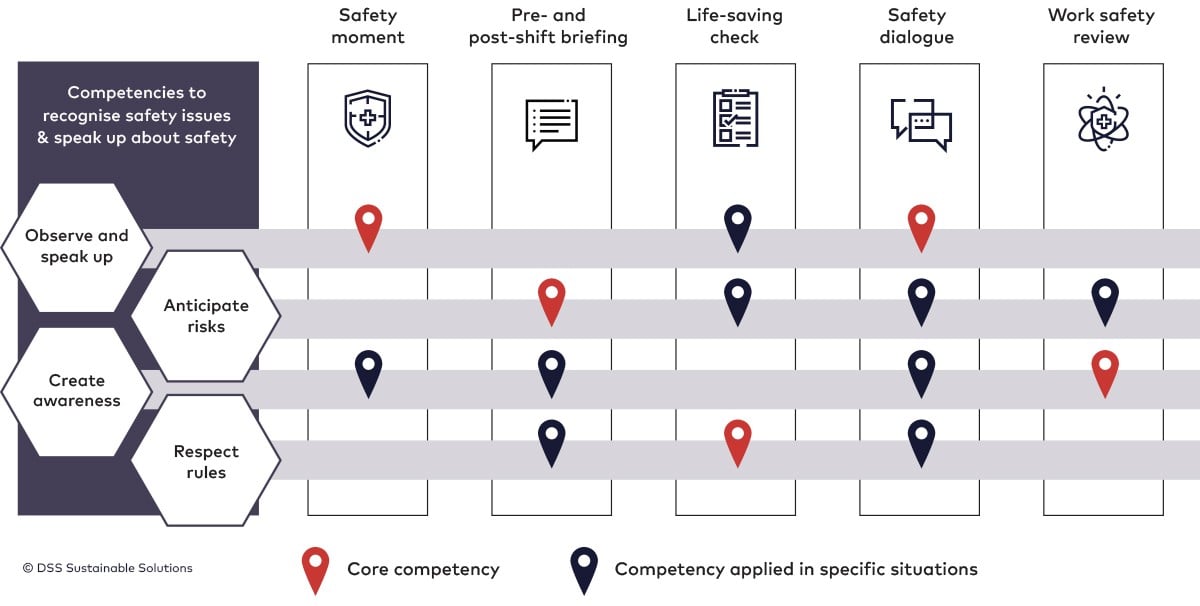
The diagram shows how each safety ritual is linked to one or more leadership competencies.
- Some competencies are primary (core) for specific rituals
- Others are applied situationally, depending on the context
This visual mapping clarifies how leadership behaviors are operationalised through structured safety routines.
Coaching Approach
The coaching sessions took place three to four times directly on employees’ construction sites to seamlessly integrate the learning experience into the working environment. Coaching groups were formed and met every three to six weeks on-site with a dss+ coach.
During each session, leadership safety rituals were practiced, participants provided each other with feedback, and the coach supported the learning process using the dss+ coaching methodology.
To effectively evaluate and visualise the development of leadership maturity within the coaching groups, the dss+ 360 IT platform was used. This enabled continuous tracking of leadership maturity progression throughout the nine-month coaching phase. On average, participants improved by one level on the dss+ Bradley Curve.
Assignment
Powerlines aimed to become a leader in safety and move toward “best in class.” To achieve this, the “PowerSafe” transformation programme was developed to establish key safety rituals.
Results
Assessment: Initial safety culture assessment (including dss+ Safety Perception Survey™) and documentation of existing rituals to embed the programme effectively
Programme Design: Development of the “PowerSafe” programme including:
- Safety rituals
- Training and coaching materials
Leadership Training: One-day training for all leaders covering:
- Safety awareness
- Visible Felt Leadership
- The five safety rituals
Coaching in the Field: Application of safety rituals in daily work on construction sites, supported by dss+ coaches over nine months
Impact
On average, participants advanced by one level on the dss+ Bradley Curve, reflecting a measurable increase in leadership maturity.
This indicates a shift from more reactive or compliance-driven behaviours toward a more proactive and ownership-based approach to safety, with leaders more consistently anticipating risks, engaging their teams, and reinforcing safe practices.
“A lot has really changed. People approach the topic completely differently and talk about it much more actively.”
- Jürgen Weiskircher, Quality Manager
“THANK YOU for the great collaboration. Personally, what motivated me during the project was seeing how initial skepticism, even rejection, turned into understanding and purpose. It was also great to witness how coaching improved safety awareness on construction sites.”