Switch ON: Where leadership meets risk awareness
Safety performance rarely fails because of missing rules — it fails when attention drifts, beliefs go unchallenged and leadership routines lose their impact. The Switch ON event brought senior safety leaders together to explore these human dynamics openly, share lived challenges, and reflect on how leadership, behaviour and awareness truly shape safe performance in today’s complex operating environments.
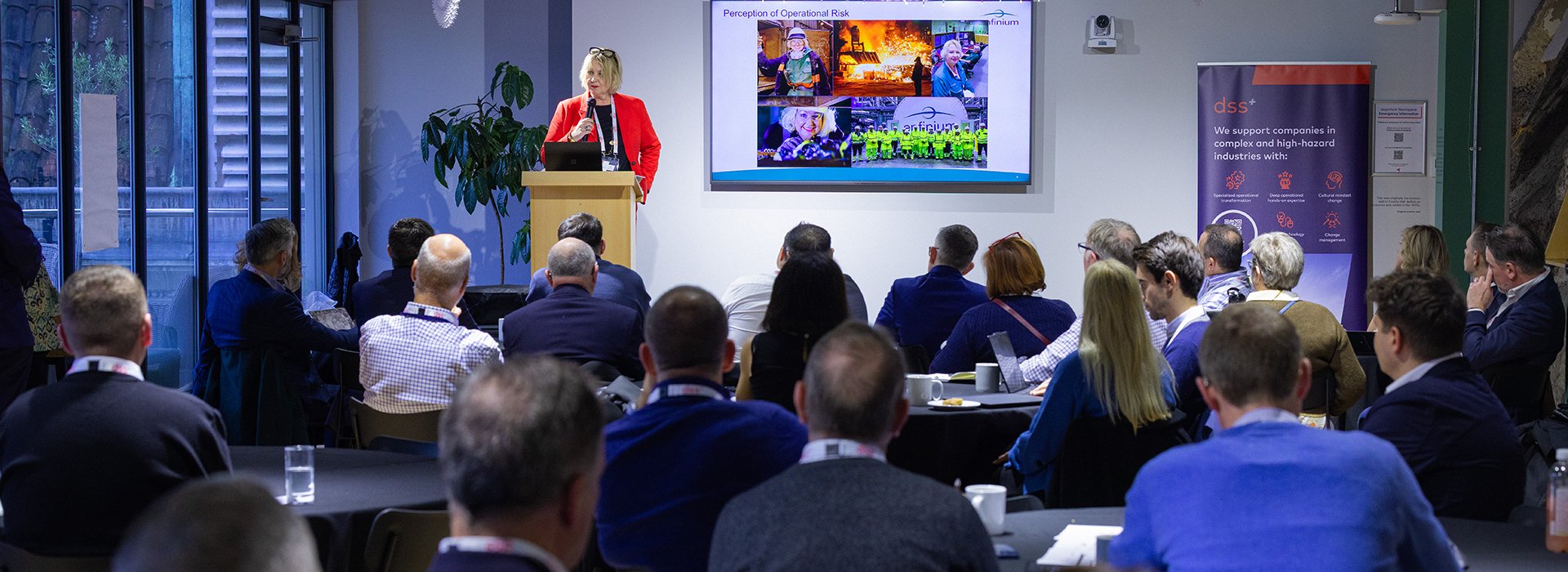
Switch ON event: Where leadership meets risk awareness and meaningful action
On 20 November 2025, senior safety leaders from across the UK came together for the Switch ON Impact Day in London — a dedicated space for reflection, dialogue, and shared learning around the human, psychological drivers, behavioural, and cultural drivers of safety.
This edition brought together a diverse group of organisations united by a commitment to strengthening safety, wellbeing, and operational performance. We were honoured to welcome Jane Atkinson CBE, COO of Enfinium, whose reflections grounded the day in the realities of executive leadership and the lived experience of transforming operational culture.
Thank you to all participants for the openness, curiosity, and energy you contributed throughout the day.
Our collective responsibility: 1 million lives behind safety decisions
The group brought together perspectives from some of the UK’s most critical sectors — including industrial operations, energy, manufacturing, infrastructure, mining, private equity, waste and recycling, retail and consumer goods — creating a uniquely diverse foundation for shared reflection and collective learning.
Collectively, the companies attending the event are responsible for the safety and wellbeing of over 1,000,000 employees worldwide — a reflection of the broad operational footprint, economic significance, and societal impact of this community of safety leaders.
The room brought together a group senior of leaders whose decisions directly shape the safety, culture, and performance of thousands of workers. With 66% of attendees in HSE Director roles and strong representation from operations, strategy, responsible investment, and general management, the event convened those with both the authority and the accountability to influence meaningful organisational change.
Leaders highlighted that the event allowed them to:
- Step back from daily pressures and reflect on their leadership with greater clarity
- Strengthen their understanding of why people take risks, beyond procedures
- Reconnect with the human meaning behind safety, and what drives commitment
- Gain fresh language and concepts — particularly around beliefs, attention and how the brain filters information
- See safety through the eyes of peers, recognising challenges shared across sectors
- Explore the micro-behaviours that create psychological safety
- Identify practical ways to make speaking up easier
- Re-energise their leadership role, leaving with renewed purpose
"The impact of the event is so powerful that I would suggest to extend it to family and friends, to people outside industry."
- Managing Director
Resilience, reliability and the truth of operational safety leadership
In her opening keynote, “The view from the top,” Jane Atkinson CBE, COO of Enfinium, offered a strategic and operational view of safety leadership. Her reflections emphasised the importance of aligning vision, culture, and daily behaviours — and the role senior leaders play in shaping the conditions for people to make safe decisions.
"Complacency is the biggest risk we face. The moment we stop questioning ourselves, we stop being safe."
- Jane Atkinson CBE, COO Enfinium
How people switch on:
The science behind attention and safer behaviour
Switch ON is designed to unlock the human side of safety – the beliefs, emotions, attention patterns, and meaning-making processes that shape everyday decisions. Rather than relying on instruction, the methodology enables individuals to discover for themselves how behaviours form, drift, and can be reshaped.
"Organisations can recover from financial impacts, but nobody fully recovers from a life changing incident.”
- Kirra Shaw, Principal Subject Matter Expert, dss+
Core pillars of the Switch ON methodology - why it works
- Experiential learning that activates personal insight
- Emotional engagement as a lever for motivation, attention, and memory
- The neuroscience of attentional focus (RAS)
- Storytelling to build psychological safety, trust, and ownership
By combining cognitive, emotional, and social dimensions, the day created a shared language participants can bring back into their organisations to strengthen risk awareness and everyday decision-making.
The challenges shaping today’s safety reality
Across the reflections and conversations of the day, several themes surfaced repeatedly, offering a clear picture of where organisations are focusing their energy and the challenges leaders are navigating today.
Many leaders spoke about the ongoing work of embedding culture across diverse entities, particularly as organisations grow, integrate new businesses or operate with teams at different stages of maturity. They highlighted the difficulty of keeping safety meaningful for people who have heard the message many times before, and the importance of securing visible commitment from senior executives to reinforce safety as shared and fundamental value not just a priority. Several also noted the need to gain alignment on core objectives – such as zero harm versus zero serious injury and fatality (SIF) – to ensure clarity and focus across their organisations.
Behavioural concerns also featured strongly. Leaders described the persistent issue of small-task risks, habituation and complacency – noting that most incidents arise when attention drifts during familiar work. Fatigue, workload pressure and confidence in routine tasks were also mentioned as factors that quietly undermine risk awareness. Some leaders expressed a desire to better understand why frontline teams deviate from expected practices, and how to engage them in more open discussions about risk perception.