Leaders Making a Difference 2026: Maria Pia De Caro
With more than 30 years’ experience in the food and beverage industry, including Unilever, Mondelez, P&G, Nomad foods, Maria Pia De Caro is a passionate advocate for safety and a proven driver of transformational change. Here, she shares her insights on why operational excellence starts with people, culture, and an uncompromising focus on safety.
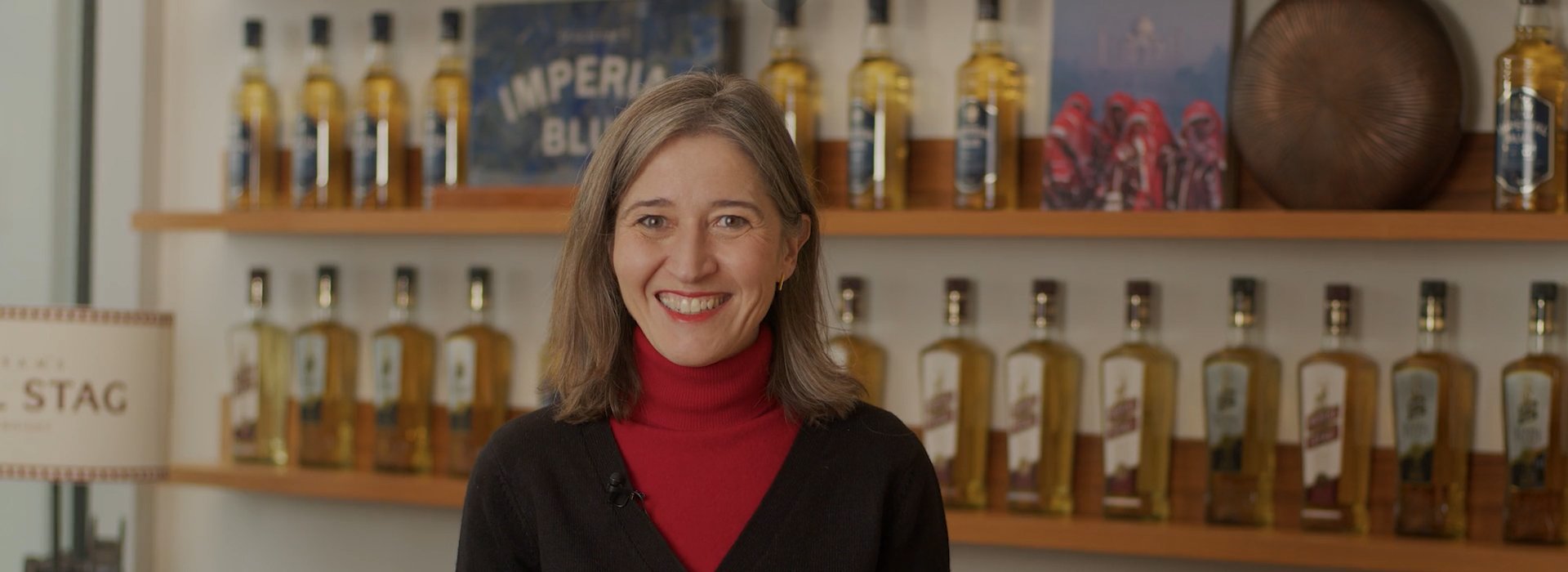
Maria Pia De Caro
EVP Global Operations and Sustainability, Pernod Ricard
[April 2026]
Q.
How did your home life influence How has your career evolved, and what experiences or influences have shaped your path as a leader?
I often describe my career as a story of two halves. At school, I was drawn to the humanities - particularly history, philosophy, Latin and Greek - and it was widely assumed that I would pursue a career in journalism.
However, when the time came to choose a degree, I asked my father a simple question: what was the most improbable job for a woman? His answer was engineering - specifically in factories. I’m still incredibly grateful for that advice, because it set me on a path I might never otherwise have considered.
I went on to study mechanical engineering and began my career as an engineer in a factory environment. At its core, engineering is about problem-solving, and that mindset has stayed with me throughout my career - from my early days as a process engineer to later roles leading large organisations. I always begin with the same fundamental question: what problem are we trying to solve, and how do we solve it?
Over time, I’ve realised that my early interest in the humanities has been just as important as my technical training. While the technical aspects of a challenge can often be addressed with the right expertise, the real complexity usually lies in people and culture. If you understand the cultural dynamics within an organisation, solving the technical side of the problem often becomes much easier.
“While the technical aspects of a challenge can often be addressed with the right expertise, the real complexity usually lies in people and culture.”
– Maria Pia De Caro, EVP Global Operations and Sustainability, Pernod Ricard
Q.
How did your career evolve from hands-on engineering into leading operational change and transformation?
I spent several years in engineering roles, first as a process engineer and later as a project manager, before moving into operations management. That transition proved to be a turning point in how I viewed safety - not simply as a compliance requirement, but to unlock broader business performance by solving problems with the people closest to them.
There was one incident that re-shaped my thinking, whereby I had a conversation with the individual involved. It became heated and I threatened to fire them. Their response stopped me in my tracks: they said that would make them happy, because it would be the first time a manager had ever shown they truly cared about safety. I realised I couldn’t accept that mindset within a team I was responsible for. Instead of dismissing the individual, I asked them to work with me on improving safety. Together we developed and implemented a programme called ‘Go for Zero’, built around four principles: zero blame, zero incidents, zero plant stops and zero breakdowns.
The results were transformative. Over time, the factory moved from being the worst performer on safety to the best in the organisation.
“If we can’t connect with people, reassure them and bring them with us, we’re unlikely to achieve lasting change.”
– Maria Pia De Caro, EVP Global Operations and Sustainability, Pernod Ricard
Q.
That’s an insightful view about solving problems for the people with the people. On practical level, how has your experience has helped you to drive cultural transformations?
I have been fortunate throughout my career to have the opportunity to travel and immerse myself in different cultures around the world, overseeing technical, complex projects in Europe, Africa and Asia, including Russia, Ukraine and Saudi Arabia. Working within these very diverse cultural conditions, I discovered that to implement a vision, you need clarity of thought, clarity of action, and to win the hearts and minds of people working with you. I believe the key to this is to recognise that people are not working for you, we are working for the people. I am a firm believer in servant leadership - it’s an old theory from the 70’s but what it means is that we, as leaders, put ourselves in a listening mode to all people, albeit stakeholders, shareholders, senior management, business leaders, operators on the line. It’s not about being subordinate but about listening to understand what really matters.
Q.
Inevitably there must be challenges, how do you overcome these?
There’s an ancient Greek concept called hubris, which describes an inflated sense of selfimportance. It’s a useful idea for leaders to keep in mind, because it can be frustrating when others don’t immediately see what appears to be the obvious solution. However, if people don’t see it, the issue is rarely the solution itself. More often, it means we haven’t yet found the right way to communicate it. Effective leadership requires recognising this and finding the key that opens people’s hearts and minds.
I often think of an Italian sketch that illustrates this idea well. It shows someone standing in front of a row of doors with a large set of keys. Unless you find the right key for the right door, you’re simply standing there with a handful of keys and making no progress. The same principle applies to leadership. If we can’t connect with people, reassure them and bring them with us, we’re unlikely to achieve lasting change. That process can be challenging, particularly when you already have a clear vision of the outcome. It requires patience, empathy and the ability to find the language that resonates.
I’ll be the first to admit that this sometimes means putting my own ego aside and listening more carefully. But that willingness to listen is essential if you want to bring people with you in pursuit of a bigger goal.
Q.
What role do technology and innovation play in driving efficiency, and how do you ensure your people are engaged in that transformation?
There is understandable concern about technologies such as AI and robotics, particularly around the potential impact on human creativity, as well as fears about job loss, ethics and privacy. However, history has shown that humanity can harness technology as a force for good.
It’s important that we stay at the forefront of these developments. AI, for example, offers powerful predictive capabilities that can help organisations anticipate and prevent incidents before they occur. Used responsibly, that can only be a positive step forward.
As someone with a STEM background, I spend a lot of time thinking about the opportunities these technologies can unlock, both in our professional and personal lives. In fact, I often spend weekends experimenting with AI myself. I may never be the best coder or designer, but I believe it’s vital that we all continue to upskill and reskill. The next generation will grow up with these technologies as second nature. That said, technology alone will not keep people safe. Without the right culture in place, even the most advanced tools will have limited impact. Organisations need a culture that encourages experimentation while balancing innovation with responsible oversight. Ultimately, technology is only as effective as the mindset behind it. When organisations combine the right culture with the right tools, they unlock not only safer operations but greater productivity as well.
“Technology alone will not keep people safe. Without the right culture in place, even the most advanced tools will have limited impact.”
– Maria Pia De Caro, EVP Global Operations and Sustainability, Pernod Ricard
Q.
How do areas like sustainability, safety, and risk management interact to support operational excellence?
In a culture of zero defects and full people engagement the focus is on protecting a golden triangle: our people, our consumers, and the planet. Safeguarding our assets becomes a way to protect our people and deliver perfect quality to our consumers. Initiatives like reducing energy consumption or decarbonising operations support all three simultaneously.
We must continually invest in culture. By developing safety leaders into technical safety experts, we can create a bridge between safety and sustainability. This ensures we consistently do the right thing for the communities we serve, including suppliers and partners.
A strong safety culture doesn’t just protect operations - it empowers us to extend our impact into the wider communities around us.
Q.
As a leader in operations, what are your key drivers for creating operational excellence?
My personal mantra is ‘seek to see’ - observe closely, understand your processes and people, and you’ll uncover the opportunities that drive operational excellence. Because once you see, you cannot unsee.