From Intent to Impact: COO Roundtable Insights 2026
The COO Roundtable convened operational leaders from Metals & Mining and Industrial Manufacturing to examine the people and system-related factors shaping performance. Pre-event inputs, including a questionnaire, interviews, market analysis and challenge fact sheets, revealed consistent patterns across organisations: increasing performance pressure, persistent capability gaps and operational variability that stem from both structural and behavioural factors.
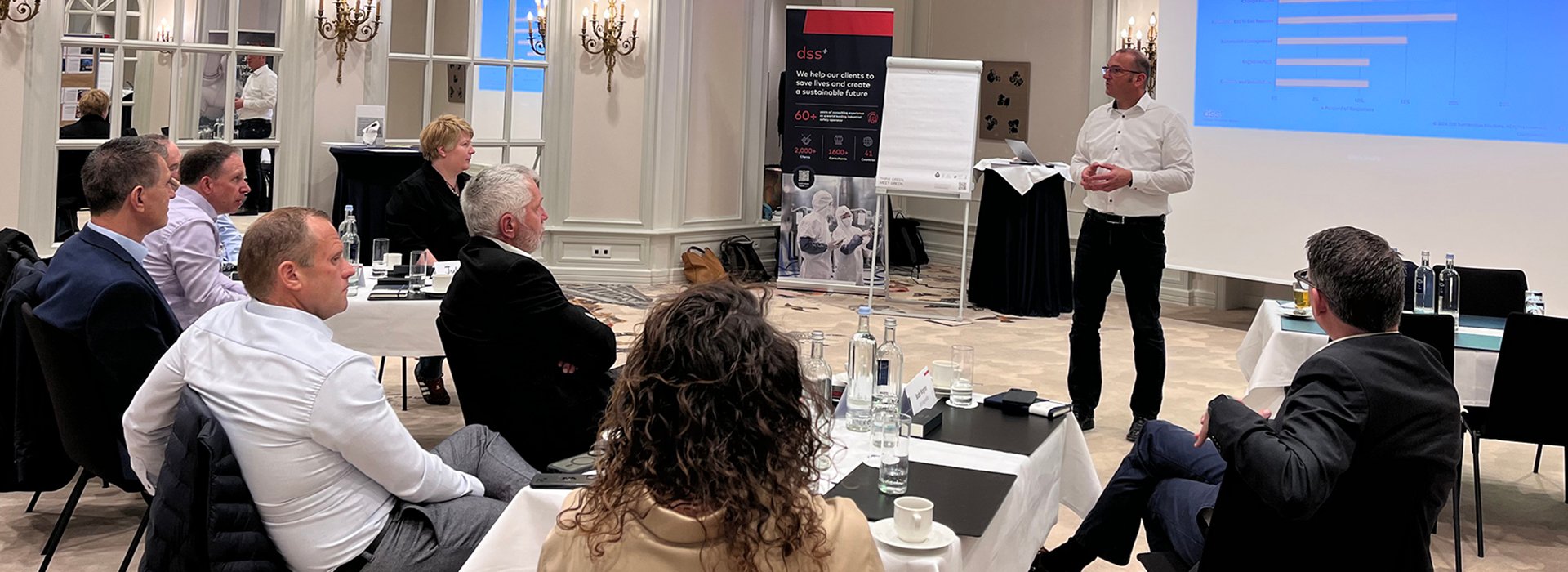
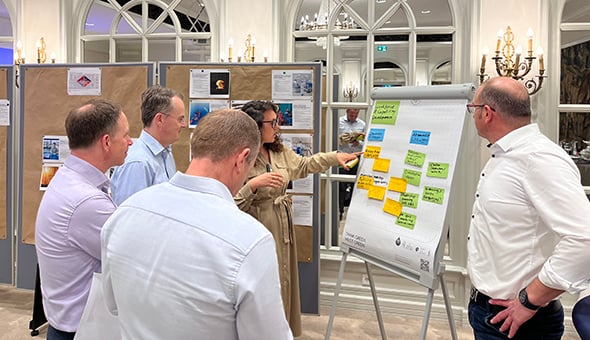
These insights formed the basis for World Café discussions and expert insights focused on practical levers for strengthening daily execution.
Workforce & capability development
A central theme across the discussions was the growing fragility of frontline capability. As experienced technicians leave the workforce, organisations are losing essential operational know-how. Participants noted inconsistent knowledge transfer between shifts, uneven leadership capability and training efforts that do not provide the frequency or follow-up required to sustain standards. These gaps directly influence stability, safety and productivity.
In response, leaders highlighted the need to embed capability development into daily routines. Modernised work instructions, including AI-supported formats, can make standards easier to access, update and apply. Qualification matrices remain fundamental for role clarity and structured development, while Leader Standard Work provides the rhythm required to stabilise expectations and behaviours.
The strongest point of alignment was the role of Shopfloor Coaching. Realtime guidance at the point of execution enables faster learning, reduces variability and supports stronger decision-making. Participants also referenced practices such as a structured Safety Week to reinforce expectations and foster shared accountability across teams.
Insight
Sustainable capability is built through daily routines – consistent standards, regular coaching and ongoing measurement – not through standalone training events.
OEE, OPEX, Scale-up& end-to-end flow
The second theme centred on performance governance. Many organisations struggle with misalignment between shopfloor and management KPIs, reducing operational focus and making it difficult for teams to prioritise effectively. Participants observed that percentage-based KPIs often lack the clarity required for frontline action and should be translated into more concrete, time-based measures.
Variability in KPI definitions, inconsistent escalation practices and differing interpretations of what constitutes a “good shift” further weaken performance discipline. Leaders identified several improvement levers: standardising KPIs across sites and shifts, simplifying visual management, defining clear triggers for deviation analysis and establishing escalation pathways that emphasise learning and problemsolving rather than fault-finding. Ensuring that information flows both upward and downward was also seen as necessary to align operational and strategic priorities. And implementing the right governance with clear roles and responsibilities to support all involved teams.
Insight
Performance improves when expectations are clearly defined and consistently applied. Shared definitions, simple metrics and aligned routines reduce ambiguity and stabilise execution.
HUMEX
The HUMEX (Human Performance Excellence) impulse reinforced the importance of leadership behaviour in shaping operational outcomes. Although organisations invest heavily in technology, assets and processes, many underinvest in the managerial routines that make these systems effective. HUMEX frames the operating system as people-centred, emphasising the link between leadership behaviour and results.
Three core insights stood out. First, frontline managers spend too little time on active supervision, limiting their ability to support teams and manage performance. Second, reflexcoaching – short, frequent, targeted interactions – significantly accelerates behavioural change when done consistently. Third, organisations applying HUMEX have achieved 15–19% productivity improvements, illustrating the impact of structured managerial routines.
HUMEX differentiates itself by making behaviour measurable and coachable. It enables leaders to focus on the small set of Key Behavioural Indicators (KBIs) that most strongly influence operational KPIs, shifting time away from administration toward value adding supervision.
Turnaround Management
Turnaround performance provided another perspective on the consequences of incomplete preparation and inconsistent routines. Many TARs do not meet their objectives (90% of TARs do not reach expected goals, 90% have scope creep of between 10% to 50%, 50% of TAR overrun schedule and 95% of post-TAR recommendations are not implemented. These challenges typically originate early, stemming from unclear strategies, insufficient Front-end Loading (FEL), methodical gaps, late risk escalation and inconsistent contractor performance.
The impulse emphasised the need to front load discipline. Strengthening scope definition, using integrated planning tools, aligning roles and governance and applying structured War Room Routines all reduce volatility and improve predictability.
dss+ supports this approach through its TAR Excellence Suite, a framework comprising 32 elements spanning strategy, scoping, planning & scheduling, pre-TAR readiness, execution and enablers designed to strengthen TAR management end-to-end. The impact is visible on all stakeholder levels, e.g. Revenue impact for C-Level, Production targets met for Operations, TAR budget and schedule for maintenance).
Implication
The principles that improve TAR outcomes – clear scope, early alignment, consistent routines – apply equally to daily operational execution.
Visible Felt Leadership
The VFL impulse focused on the behaviours that shape safety culture and operational discipline. VFL positions leadership as a progression: talking, doing, being seen doing and ultimately being believed. This progression strengthens credibility and supports a culture where expectations are consistently met, even under pressure.
Key competencies associated with VFL include earning trust, fostering accountability, managing performance, coaching effectively and making informed decisions. These competencies manifest in everyday routines – Gemba walks, safety conversations, governance meetings and reporting line coaching. It is the visible practice of these routines that strengthens leadership capability.
Implication
Leadership credibility is built through routine, visible behaviour. Culture is sustained not by messages, but by what people genuinely believe and practice when unobserved.
The Path Forward
The Roundtable highlighted the value of targeted dialogue among operational leaders facing similar systemic pressures over different industries. The discussions focused on the organisational routines, leadership behaviours and governance mechanisms that directly influence execution quality. Creating a network of COOs, Site Managers and Production Leaders, talking the same language and interchanging the best practices. Building on this momentum, COO Roundtables will follow, with the possibility of an additional session following the dss+ Impact Day.
Leaders continue to seek environments where they can benchmark what works, exchange practical insights and identify actions that deliver measurable impact.
The insights from this Roundtable underline a clear message:
"Performance excellence is achieved when people centric leadership, capability development and disciplined management routines work together in daily operations."
How dss+ can help
The challenges raised at the Roundtable directly reflect areas where dss+ supports clients in strengthening daily execution and leadership effectiveness.
dss+ brings practical tools, proven routines and deep operational expertise to turn insights into measurable impact.
- Build frontline capability
-
- Modern, easy‑to‑use work instructions (incl. digital / AI-supported).
- Clear qualification matrices and structured development paths.
- Leader Standard Work and targeted shopfloor coaching to stabilise behaviour.
- Strengthen performance governance
-
- Standardised KPIs, definitions and routines across sites.
- Simple, time‑based metrics that guide frontline decisions.
- Clear escalation pathways focused on learning and problem‑solving.
- Make leadership behaviour actionable (HUMEX)
-
- Measurable Key Behavioural Indicators (KBIs).
- Short, frequent reflex‑coaching to increase active supervision.
- Proven impact: 15-19% productivity improvement in real operations.
- Improve turnaround outcomes
-
- TAR Excellence Suite: structured scoping, FEL discipline, planning and governance.
- Integrated War Room routines that reduce variability and delays.
- Strengthen culture through leadership routines
-
- Visible Felt Leadership to build trust, accountability and consistent expectations.
dss+ helps organisations embed the routines and behaviours that make performance reliable. Every day, every shift.