From AI Hype to Risk Visibility: The Future of EHS Performance
A dss+ perspective on the next frontier of EHS performance
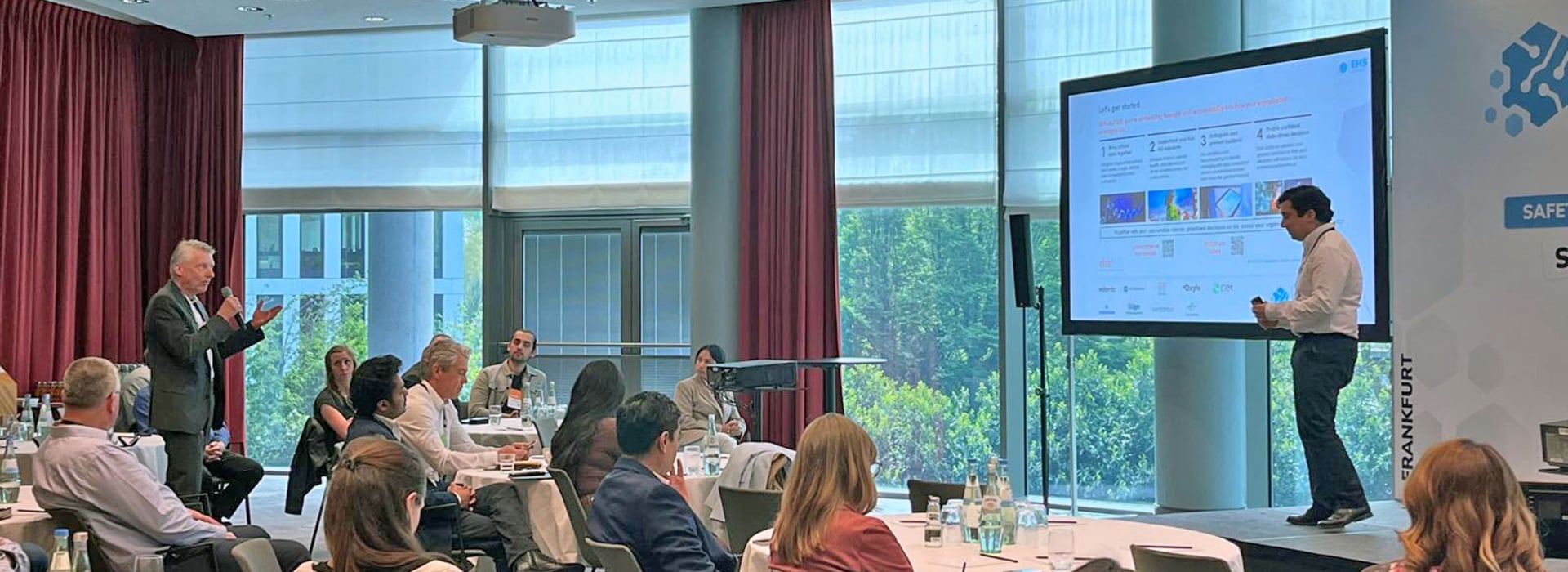
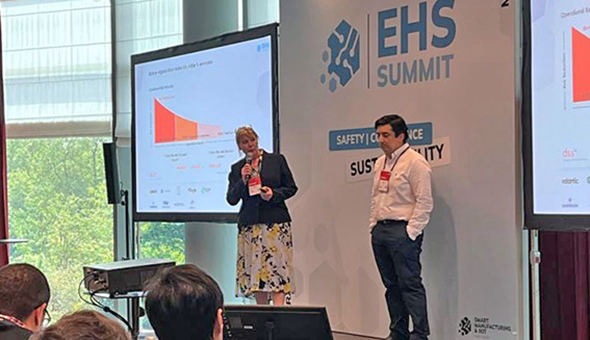
Following discussions at the EHS Summit in Frankfurt (April 27-28, 2026), one theme became unmistakable: AI is everywhere, but visibility remains elusive. Across German industry, organisations are accelerating investments in digital platforms, analytics and AI-driven applications. Yet despite this progress, a fundamental paradox remains. It is not a lack of data, nor a lack of tools - it is a lack of visibility.
When more data doesn’t mean better decisions
Industrial organisations today capture more information than ever before - incidents, near misses, observations, sensor data, maintenance records and increasingly, AI-generated signals. And yet, leadership teams continue to struggle with a simple question: where is our highest risk actually building, and what should we do about it?
The challenge is not observation, but clarity on what matters most. In one dataset, out of more than 826,000 observations, only 8,200 represented catastrophic or major exposure. The overwhelming majority focused on lower-risk issues such as PPE compliance or housekeeping.
"A persistent gap exists between perception and reality. Leadership often assumes that safety culture is strong, yet data reveals variation in behaviours and execution across sites."
The hidden cost of poor visibility
This lack of clarity creates systemic blind spots. Critical risks become buried in noise, as high-volume, low-impact activity dominates attention. Leadership focus drifts toward what is most frequent rather than what is most dangerous, leaving high-consequence exposure insufficiently addressed.
Fragmentation compounds this. In many organisations, risk information is distributed across multiple platforms – enterprise systems, local tools, spreadsheets and increasingly - AI outputs. A client case showed, over 40 disconnected data sources were identified. Without integration, there is no single view of risk.
Conflicting signals emerge, decision-making slows, and leaders revert to reacting to recent incidents or the loudest alerts rather than anticipating risk.
A further challenge lies in the false confidence created by documented controls. On paper, organisations appear robust. In practice, barriers degrade silently. Analysis of high-temperature and fire-related risks showed that failures were driven by a combination of unsafe equipment conditions, lack of risk awareness, inactive sensors and weaknesses in emergency response systems. Most strikingly, physical barriers were absent in recorded incidents and near misses. The issue was not that controls did not exist, but that organisations lacked visibility into whether they were working in reality.
Finally, a persistent gap exists between perception and reality. Leadership often assumes that safety culture is strong, yet data reveals variation in behaviours and execution across sites. Without mechanisms to measure and surface these differences, organisations end up managing assumptions rather than actual conditions, allowing systemic risk to accumulate unnoticed.
What changes when organisations can see clearly
When organisations connect culture, data and governance into an integrated view of risk, performance shifts rapidly. In one multi-site transformation, incident frequency decreased by 76% and severity by 85%, even as the business scaled fourfold. This was not achieved by introducing more rules or more reporting, but by making risk visible to those who can impact them.
From fragmentation to foresight
Most organisations today operate in a transitional state. They have moved beyond purely reactive safety management, but remain constrained by fragmented, data-heavy environments. The next stage is not incremental improvement - it is a shift to foresight.
This shift involves moving from analysing incidents to anticipating them, from collecting data to connecting it, and from reporting metrics to delivering action. It requires integration across operational data, governance systems and human behaviour, enabling organisations to progress from hindsight > to insight > to foresight.

AI’s role, and its limits
AI plays an important role in this evolution. It can detect patterns, highlight anomalies and surface emerging risks more quickly than traditional methods. However, on its own, AI does not solve the problem.
Its value is realised only when it contributes to visibility that drives action, helping organisations focus on the right risks and enabling timely, effective decisions.
What this means for German industry
German industrial organisations are well positioned to lead this transition. With strong engineering foundations, mature compliance systems and growing digital capabilities, the building blocks are already in place. The opportunity now is to connect these elements into a coherent system of risk visibility - one that focuses on high-consequence exposure, the real performance of controls, and aligns leadership action with actual conditions on the ground.
What this means for German industry
German industrial organisations are well positioned to lead this transition. With strong engineering foundations, mature compliance systems and growing digital capabilities, the building blocks are already in place. The opportunity now is to connect these elements into a coherent system of risk visibility - one that focuses on high-consequence exposure, the real performance of controls, and aligns leadership action with actual conditions on the ground.
How dss+ can help
By bringing together human, operational and technological signals into one integrated system, dss+ enables organisations to build capabilities in true visibility across their risk landscape.
Specifically, dss+ helps organisations to:
- Integrate fragmented data sources into a single, coherent view of risk;
- Identify and prioritise high-consequence exposures rather than high-volume activity;
- Assess the real effectiveness of controls and actioning hidden failure points;
- Translate complex data into clear, actionable insights for people to take action.
This approach enables leaders to act on the right signals at the right time, driving better outcomes across safety, operational performance and culture.
Closing perspective
Most organisations do not have a safety problem - they have a visibility problem. When that visibility is achieved, behaviour shifts, ownership moves closer to the work, and prevention becomes systematic.
The future is not about collecting more data - it is about learning to see risk before it strikes.