Do organisations truly know their Climate Value at Risk?
At the Executive Climate Risk Roundtable hosted by dss+ in London, senior leaders from energy, mining, infrastructure and investment confronted a critical inflection point: climate risk is widely acknowledged – but rarely integrated effectively into Enterprise Risk Management or translated into quantified financial exposure.
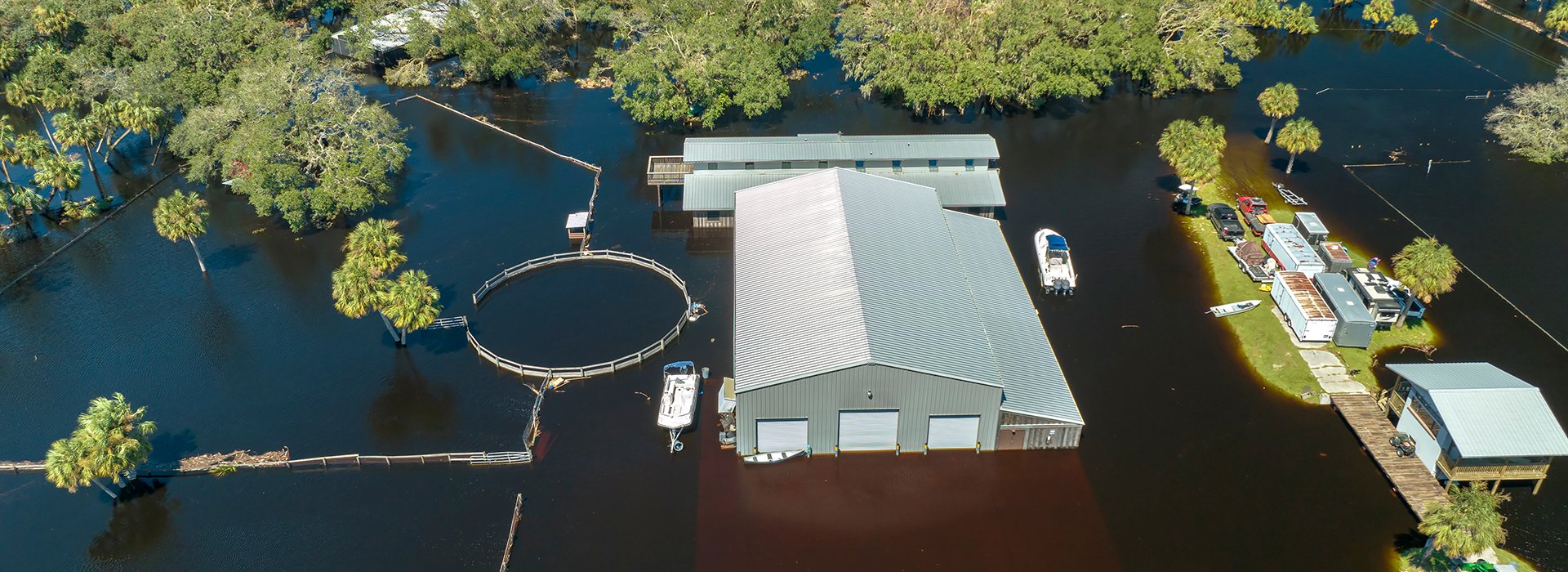
The event took place against the backdrop of global temperatures exceeding 1.5°C in 2024 for the first time in recorded history. Annual economic losses from natural catastrophes now regularly surpass $300 billion. The World Economic Forum estimates that businesses failing to adapt to physical climate risk could see up to 7% erosion in annual earnings by 2035. That said recent backlash against “ESG” is potentially clouding an issue which continues to be more material than ever to global enterprises and their Boards and executives.
The roundtable framed this context in the recognition that these are not just environmental signals. They are financial and enterprise risk signals.
As Dr. Gerhard Bolt, Principal Climate and Sustainability at dss+, noted during the discussion, climate risk must be managed with the same economic discipline applied to any other enterprise risk – grounded in financial clarity, operational validation and structured execution.
Three uncomfortable realities leaders are facing One of the key themes that emerged during the roundtable was that awareness is no longer the constraint. Discipline is.
First, most boards cannot clearly articulate their Climate Value at Risk (VAR). While ESG dashboards and scenario narratives are common, few organisations can quantify how a specific hazard under a defined scenario would translate into financial loss at asset level. Without damage functions and quantified exposure, climate risk remains conceptual — and conceptual risks rarely compete for capital.
Second, insurance and markets are repricing physical risk faster than many organisations are adapting. Coverage limitations are increasing and deductibles are rising in high-exposure regions. The strategic question is no longer whether climate risk will affect financial performance, but whether companies are anticipating that repricing — or absorbing it reactively.
Third, operational thresholds are already being breached. At one offshore operation, wind speeds above 17 knots halt drilling activities, generating losses of approximately $300,000 per day (event discussion example). In another case, prolonged drought conditions exceeding 100 consecutive days without meaningful rainfall would force mining operations to suspend production due to water constraints (event discussion example). These examples illustrate that climate variability is no longer theoretical – it is operational.
"We cannot report ourselves out of this. We need to know what is truly at risk – in financial terms."
- Dr. Gerhard Bolt, Principal Climate and Sustainability at dss+

From climate data to decision-grade insight
During the roundtable, leaders emphasised the need to transform climate data into actionable financial insight. Climate modelling today provides granular projections across heat thresholds, flood probabilities and wind intensity. Through advanced geospatial modelling capabilities — including EarthScan by Mitiga Solutions — organisations can assess site-specific exposure with increasing precision.
However, raw hazard signals do not influence capital committees. Climate data becomes strategically relevant only when integrated into asset-level hazard shortlisting, receptor-specific vulnerability matrices, financial damage functions and scenario-based Climate Value at Risk calculations.
"Climate data without financial translation is noise."
-Greg McFarlane, Head of Partnerships, Mitiga Solutions
The structured Climate Risk Framework presented during the session narrows complexity by focusing on material hazards, validating vulnerabilities at site level and linking exposure directly to economic impact. Only then can adaptation investments be compared against measurable risk reduction. Read the full Climate Risk framework here
Maturity: from reactive to integrated
The discussion revealed a wide spectrum of organisational maturity — and, in many cases, a structural blind spot around quantified exposure.
Across industries, climate risk is increasingly recognised at leadership level. It appears on risk registers, is referenced in strategy documents and features in sustainability reporting. Yet recognition does not necessarily translate into integration.
In many organisations, Climate VAR remains partially quantified, modelled at high level or burdened by wide margins of uncertainty. Financial exposure may be discussed in principle, but not consistently embedded into capital allocation models, asset design criteria or portfolio decisions. Scenario alignment is often declared, yet rarely stress-tested at asset level against operational thresholds and financial implications.
"When Climate Value at Risk is grounded in operational reality, climate risk moves from theory to governance. This integration into Enterprise Risk Management results in well informed capital decisions."
-Dr Paul McNellis, UK Director, dss+
At Board level, this creates a subtle but significant tension. Executives are expected to safeguard long-term enterprise value, yet the visibility they receive may still be framed in technical climate terminology rather than decision-ready financial insight. More mature organisations demonstrate a different pattern. Climate risk assessments feed directly into budgeting cycles. Hazard exposure is translated into asset-level financial impact. VAR informs infrastructure upgrades, resilience investments and portfolio prioritisation. In these cases, resilience is not a reporting exercise — it is embedded within governance and capital discipline.
The distinction is not awareness. It is financial integration.
A moment of reflection for Boards
Before approving further adaptation initiatives, Boards should ask a more fundamental question: do we truly understand our financial exposure?
Can we quantify our Climate VAR at asset level — and state the margin of error with confidence? Are material physical hazards translated into financial impact within capital allocation models? If insurance markets are repricing risk, have we assessed the implications for asset valuation and cost of capital? When resilience investments are approved, can we demonstrate how much exposure they reduce?
Climate risk becomes material not when it is disclosed, but when it influences capital decisions. If VAR is not decision-ready, resilience remains theoretical.
Physical risk versus poor practice
An important distinction raised during the roundtable was the difference between physical climate risk and operational weakness. In one example discussed, a significant supply reduction initially attributed to climate stress was later linked to poor replenishment practices rather than direct climate exposure (event discussion example).
Climate risk can amplify weak operational discipline, but it does not replace the need for it. Structured hazard identification and site validation are therefore critical to distinguish between true physical exposure and preventable mismanagement.
The next move: turning intent into discipline
For organisations committed to managing climate risk effectively, the path forward requires structured action. Focus on the limited number of hazards that materially affect assets. Validate vulnerabilities with operational teams. Develop damage functions that convert hazard intensity into financial impact. Quantify VAR under multiple scenarios. Prioritise adaptation measures based on cost-versus-risk reduction. Embed governance so that climate risk becomes institutionalised within budgeting and board routines.
In a more volatile climate, resilience is no longer a sustainability ambition. It is a fiduciary responsibility. The time to review exposure is not after disruption occurs - but before volatility is priced into the balance sheet.